Since 2022 I’ve been using Logseq and evolving my Mesh-Shaped PKM. Over the last year, with AI in the loop, the center of gravity shifted:
From "record knowledge better" to "finish tasks faster".
AI as a Power-Up
The biggest shift is input cost dropping.
In the old flow:
- Collect info through many tools: tasks, read‑later, notes, etc.
- Do a first pass in Logseq: triage tasks vs ideas vs deep‑learning candidates
- Store and categorize large amounts of notes; build links
- Regularly refactor, summarize, condense
With AI:
- I almost never paste more than 200 characters
- I rarely save more than 10 raw images or links
- I can just keep an AI conversation link or a prompt, and re‑generate a 1k+ word answer when needed
So I rebuilt my workflow and made AI an explicit part of each stage.
Task-Driven System
I split my work system into three layers.
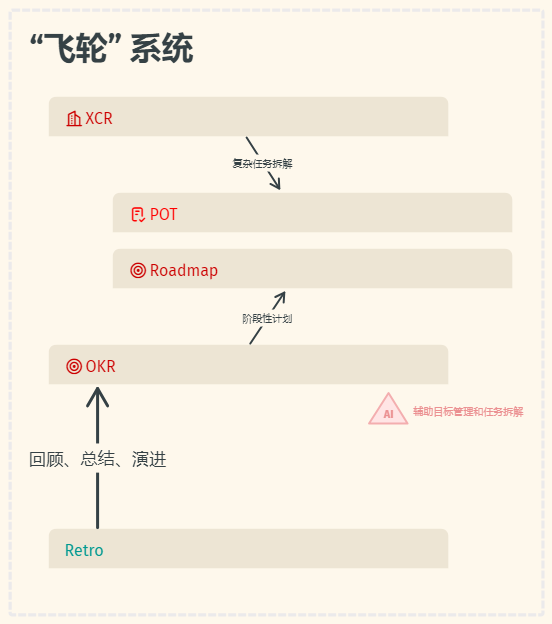
1. Flywheel – Long-Term Task System
The flywheel is a macro‑level goal management model, focused on:
- Vision – a long‑term direction, not necessarily a precise target
- Action – continuous experiments and adjustments toward that vision
- Feedback – outcomes that either spawn new GTD tasks or refine the flywheel items
- Iteration – adjusting plans based on feedback to keep moving toward the vision
2. GTD – Execution Layer
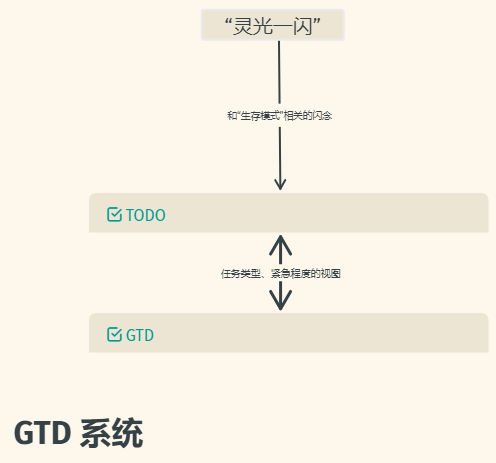
GTD is about clear, actionable tasks.
- Collect – everything goes into an inbox
- Process – decide: do, delegate, defer, delete
- Organize – assign tasks to lists (waiting, projects, calendar, etc.)
- Review – regularly scan and update
- Do – execute based on context, energy and priority
3. Feedback – Learning Layer
Each task should lead to:
- Output feedback – writing, notes, artifacts
- Input feedback – new tasks or adjustments to the flywheel
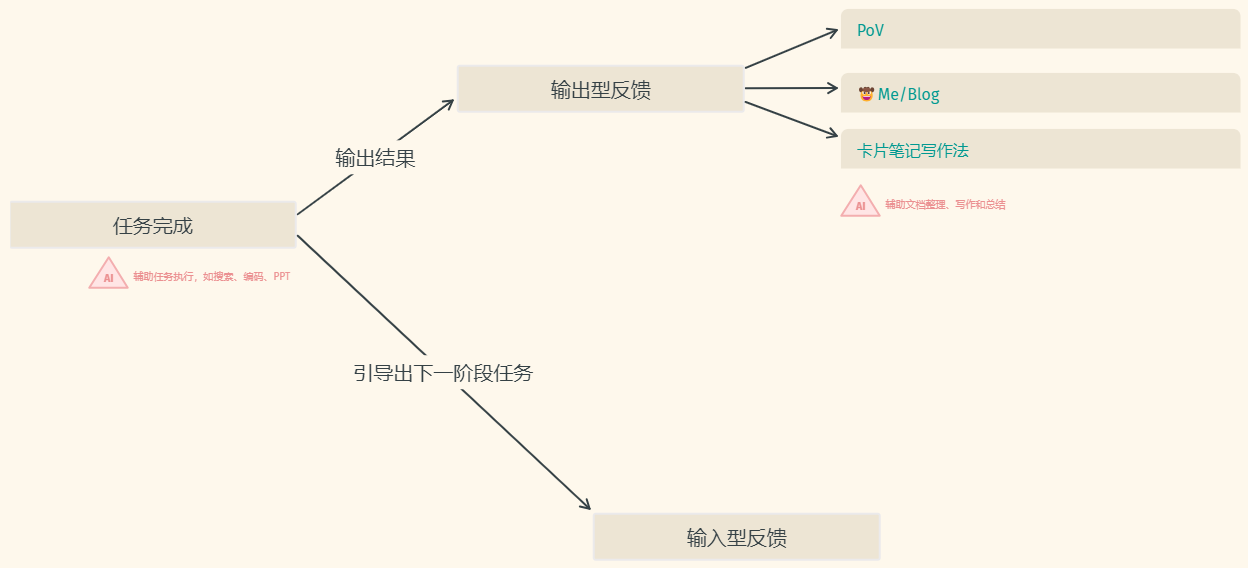
Everything shows up as tasks: reading a book, trying a tool, exploring a topic – each with explicit feedback mechanisms to keep the loop going.
Traditional PKM is note‑centric and optimization goal is "better capture & organize". With AI, the bottleneck is no longer storing information but acting on it. The system should therefore be task‑centric, with value delivery as the primary metric.
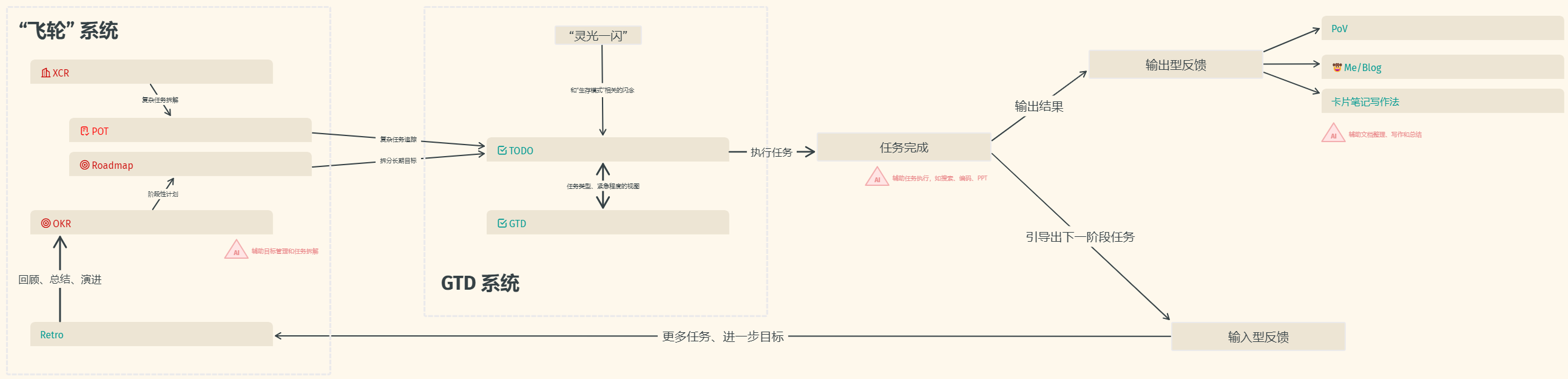
AI can help at many points: goal shaping, task breakdown, execution (research, summarization, coding), reflection. The net effect is higher throughput per unit of attention.
Tools in the Stack
My current AI stack looks like this:
- GitHub Copilot – code, docs, blog posts (anything in VS Code)
- Logseq AI Assistant – everything inside the graph: summaries, translations, tagging, task breakdown, OKR and retros
- Kimi – quick ideas and read‑later
- Free, cross‑platform (app, WeChat, web)
- I throw all fleeting thoughts and links into Kimi
- Instant answers, summaries, image descriptions, etc.
- Save conversation links as "knowledge handles" for later
- In Logseq I only keep the link plus a short description and a few tags
Some Thoughts
The Marginal Value of Traditional KM Is Dropping
Knowledge management was invented to fight information overload:
- Use pages, blocks and tags to build indices
- Make it easier to find what you need later
With AI, the index becomes the prompt, and information becomes the answer, stored in the cloud.
The purpose of PKM stays the same: increase execution efficiency.
AI lets us:
- Spend less time on moving information around
- Spend more time on deciding and doing
So next‑gen PKM should be designed around:
- Task flow and feedback loops
- Where AI can safely take over mechanical work
- Where humans must still make the call
Once that’s clear, "AI‑powered PKM" stops being a buzzword and becomes a concrete operating system for your work and life.